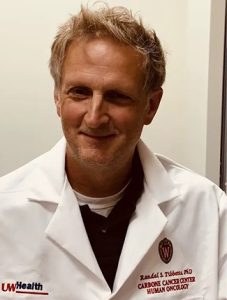
Randal Tibbetts
Credentials: Human Oncology Department
Position title: DNA repair; RNA splicing; neurodegeneration; amyotrophic lateral sclerosis
Email: rstibbetts@wisc.edu
Phone: (608) 262-0027
Address:
3059 Wi Institute Medical Research
1111 Highland Ave
Madison, WI 53705
LAB WEBSITE:
FOCUS GROUPS:
Cancer Biology; Developmental Biology & Regenerative Medicine; RNA Biology
RESEARCH DESCRIPTION:
Investigating the Molecular Pathogenesis of ALS and FTD
Our laboratory investigates the molecular mechanisms underlying Amyotrophic Lateral Sclerosis (ALS) and Frontotemporal Dementia (FTD), two devastating neurodegenerative disorders that share overlapping clinical and genetic features yet currently lack effective therapies.
We focus on the 10–15% of cases caused by inherited mutations to uncover fundamental mechanisms that drive disease initiation and progression. By understanding how defined genetic alterations disrupt cellular pathways, we aim to identify actionable targets for therapeutic intervention.
To achieve this, we employ an integrated “fly-to-human” discovery pipeline:
-
-
-
- Discovery
We leverage the genetic power of Drosophila to identify pathways that modify the toxicity of ALS/FTD-associated mutations. - Mechanistic Validation
Candidate pathways are translated into human systems using induced pluripotent stem cell (iPSC)-derived motor neurons and brain organoids to define disease-relevant mechanisms. - Therapeutic Testing
Promising modifiers are evaluated in gene-edited mouse models to assess their potential for therapeutic benefit.
- Discovery
-
-
Using this cross-species strategy, we have identified axon guidance and endolysosomal pathways as key regulators of neurodegeneration caused by ALS/FTD-associated mutations in the ubiquitin chaperone, UBQLN2. Our ongoing work seeks to define precisely how ALS/FTD-linked mutations in UBQLN2 and other ALS/FTD-associated genes disrupt these pathways and to translate these insights into strategies capable of preventing or reversing neuronal dysfunction.
ALSO A TRAINER IN THE FOLLOWING PROGRAMS:
Genetics; Molecular and Cellular Pharmacology Training Program (MCP); Cancer Biology Training Program,